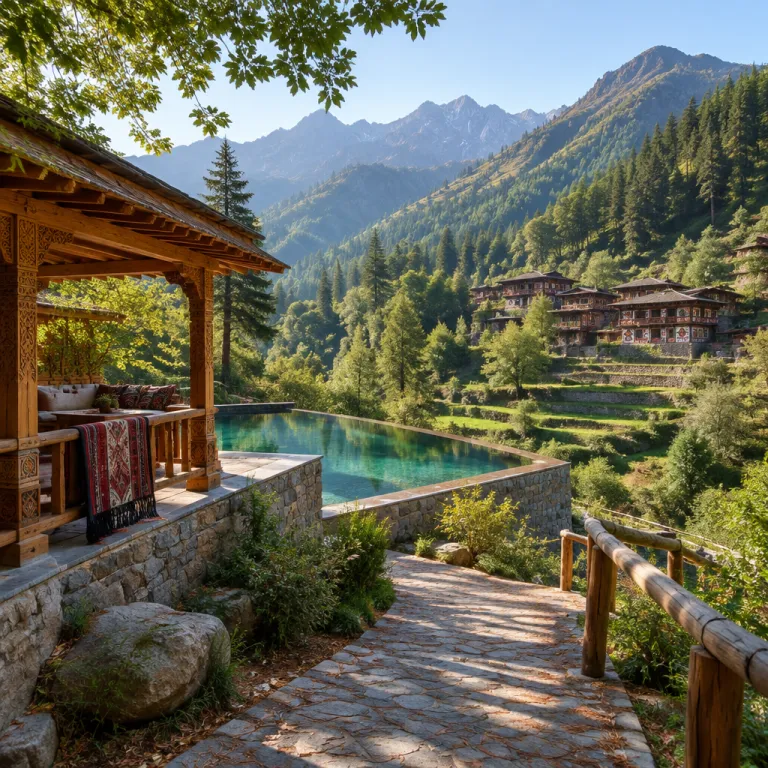
Kalash Pakistan for luxury travellers: where heritage meets high comfort
Kalash Pakistan draws curious people who want both cultural depth and refined comfort. In this remote corner of north west Pakistan, the Kalash valley system offers rare access to an Indigenous mountain community while still allowing premium hotel standards. Thoughtful planning will let you experience Kalash culture by day and return to heated rooms, fine linens, and attentive service at night.
The three main Kalasha valleys of Bumburet, Rumbur, and Birir sit in the wider Chitral Valley, framed by the dramatic Hindu Kush mountains. Luxury travellers usually base themselves either in Chitral town or in the more accessible Kalash valley of Bumburet, then arrange guided day trips into the other valleys. This approach balances safety, comfort, and cultural sensitivity, especially for families, older people, or guests new to South Asia.
Most premium properties in Khyber Pakhtunkhwa that serve Pakistan Kalash itineraries are not inside tiny village clusters but on the valley roads, where access and security are stronger. You will find spacious rooms, reliable hot water, and staff trained to brief guests on Kalash culture, local etiquette, and the complex relationship between the Kalash community and the surrounding Muslim populations. When comparing options, check whether your hotel can arrange licensed guides who speak both Urdu and the Indo-Aryan Kalasha language, and whether they are registered with the Khyber Pakhtunkhwa Tourism Department through official provincial tourism and culture listings.
Understanding Kalash people and planning respectful cultural stays
Any luxury trip to Kalash Pakistan should begin with understanding who the Kalash people are. They are a small non-Muslim community living in the Kalasha valleys, sometimes described as one of the last polytheistic groups of the Hindu Kush, surrounded by a majority Muslim population in Chitral and wider Pakistan. Their religion blends animist beliefs with elements that some scholars link to older Indo-Aryan and Indo-Iranian traditions, though serious researchers now reject romantic myths about direct descent from Alexander the Great and instead emphasise long-term regional continuity.
Kalasha people live in compact wooden houses stacked along steep slopes, so premium hotels cannot sit inside every village without disrupting daily life. Instead, you will usually stay in a comfortable lodge near the main road of a Kalash valley, then walk or drive into the village with a guide who manages introductions. This arrangement protects privacy for Kalash women and elders, while still allowing meaningful encounters for respectful visitors. For more context on how Pakistan balances heritage and comfort in other regions, you can read about staying near Buddhist sites on the Gandhara trail without compromising on comfort.
Religion is a sensitive subject here, because some Kalash people have converted to Islam over time, creating mixed families and complex identities. You may hear local conversations about conversion to Islam, or meet younger men who have converted but still attend certain seasonal events in the Kalasha valleys. Anthropologist Wynne Maggi, in her ethnography “Our Women Are Free” (2001), notes that many Kalasha “navigate multiple worlds at once,” maintaining ties to both Kalash culture and the wider Muslim society of South Asia, so a respectful guest will avoid pressing people about why they converted and instead listen to how they describe their own lives.
Where to stay: from Chitral town comforts to intimate valley lodges
Choosing where to sleep is the most important decision for a Kalash Pakistan itinerary focused on both luxury and authenticity. Many travellers start with one or two nights in Chitral town, where larger hotels offer more polished services, then move into a smaller property in a Kalash valley for a closer look at village life. This split stay lets you enjoy higher-end facilities while still waking up to the sound of the river in a remote valley Kalash setting.
In Chitral, premium hotels typically provide spacious rooms, reliable generators, and professional concierges who understand the logistics of reaching the Kalasha valleys. Staff can arrange private jeeps, experienced drivers, and guides who know both the Kalash community and the Muslim settlements along the road. These hotels also tend to be more familiar with international expectations around privacy for women, dietary needs, and flexible check-in times after long drives from south Pakistan.
Inside the Kalash valleys, accommodation is more intimate but can still feel premium when carefully chosen. Look for lodges that offer clean en suite bathrooms, strong blankets for cold nights, and terraces facing the Hindu Kush ridges, similar in spirit to the high-end heritage stays described for Lahore in this guide to luxury stays in the city of Lahore. A practical example is to ask whether a lodge such as Kalash Continental in Bumburet, Ayun Fort Inn near the valley entrance, or comparable properties employ local Kalash women and men, and whether part of your room rate supports village projects, because this shows a deeper commitment to Kalash culture and long-term sustainability.
Kalash culture, festivals, and how luxury guests can attend respectfully
Many people plan their Kalash Pakistan journey around a specific festival, hoping to see the most vivid expressions of Kalash culture. The three main celebrations are Joshi in late spring, Uchal in late summer, and Chaumos in early winter, each tied to the agricultural cycle of the Kalasha valleys. During these days, Kalash women wear elaborate black dresses with bright embroidery, while men and children join processions, songs, and rituals that honour their distinctive religion.
Premium hotels in Chitral Valley and Bumburet often create special packages for festival days, including guided access to designated viewing areas. A good hotel will brief you carefully on dress codes, photography rules, and when it is appropriate to enter a village square or sacred space. Remember that for Kalash people these are not staged performances but living rituals, taking place in a region where most neighbours are Muslim and where the balance between openness and privacy is delicate.
Some Kalash women may be comfortable being photographed, while others will refuse, especially in more conservative villages or during moments linked to their religion. Always ask permission through your guide, and accept that the will of the person is final, whether they are from the Kalash community or from the surrounding Muslim populations. Reports in outlets such as the Washington Post have highlighted tensions around tourism and cultural change, so a luxury traveller should aim to leave a light footprint, support local decision making about how festivals in the Kalasha valleys are shared with visitors, and prioritise ethical tour operators.
Practical planning: routes, seasons, and safety for high end stays
Reaching Kalash Pakistan requires more effort than visiting major cities, which is why careful planning matters for luxury and premium travellers. Most itineraries start with a domestic flight or long drive to Chitral in Khyber Pakhtunkhwa, then continue by road into the Kalasha valleys along narrow mountain routes. Road conditions change with the season, so your hotel should provide up-to-date information and arrange vehicles suited to the steep tracks of each Kalash valley.
Spring and autumn are usually the most comfortable times for people who prefer mild temperatures and clearer skies. Winter brings snow to the Hindu Kush, making access to some villages difficult, while summer can be hot in the lower parts of Chitral Valley but pleasant in higher valleys. Luxury travellers often choose shoulder seasons to combine quieter village life with good chances of attending smaller local events rather than the most crowded festival days.
Safety in Pakistan Kalash areas is generally stable, but you should still follow local guidance and register with your embassy when necessary. Premium hotels tend to have better security protocols, clearer communication with district authorities, and established relationships with both Kalasha people and neighbouring Muslim communities. When you book, ask direct questions about emergency plans, medical access, and how the property manages cultural sensitivities around religion and interactions between guests and the Kalash community; keep a simple checklist covering permits, embassy contacts, best months, and realistic travel times via the Lowari Tunnel.
Immersive yet ethical experiences: from village walks to dark sky nights
Once you have settled into your chosen hotel in Kalash Pakistan, the real value comes from how you spend each day. Guided walks through a village allow you to see terraced fields, wooden shrines, and the daily routines of Kalash women and men, while still respecting private household spaces. Many guests describe the sound of the river in a valley Kalash setting, combined with the scent of walnut and apricot trees, as the most memorable part of their stay.
Ask your hotel to arrange meetings with Kalasha people who are comfortable speaking with visitors about their lives between Kalash culture and the wider Muslim majority of Pakistan. Some may share stories of relatives who converted to Islam, explaining how religious change has affected family dynamics, inheritance, and participation in festivals. One Kalash host in Bumburet explained to a researcher that “we welcome guests who come to learn, not to judge,” a reminder that the Kalash community navigates pressures from South Asia’s dominant faiths while trying to maintain their own Indo-Aryan language and rituals.
Night in the Kalash valleys can be spectacular, because the Hindu Kush ridges block much light pollution, creating ideal conditions for stargazing from hotel terraces. Properties that understand this asset may offer blankets, hot drinks, and guided sky sessions, similar in spirit to the experiences described for light-free valleys in this article on dark skies and hotel terraces for stargazing. Under these skies, you can reflect on how a tiny Indo-Iranian-linked community in north Pakistan has preserved its religion and identity, even as some Kalash people join the Muslim majority and as tourism slowly reshapes life in the Kalasha valleys.
Key statistics for planning a trip to Kalash Pakistan
- Researchers and government estimates suggest that the Kalash people number between 3,000 and 4,000 individuals, concentrated in three main Kalasha valleys of Bumburet, Rumbur, and Birir within Chitral District of Khyber Pakhtunkhwa, highlighting how small and vulnerable this community is compared with Pakistan’s population of more than 240 million (see, for example, Pakistan Bureau of Statistics census summaries for Chitral District and ethnographic surveys by the Institute of Policy Studies and allied research centres).
- Chitral town sits at an elevation of roughly 1,500 metres, while many villages in each Kalash valley lie between 1,800 and 2,200 metres above sea level, so travellers should plan for cooler evenings and potentially reduced oxygen compared with lowland South Asia (based on topographic data compiled by the Survey of Pakistan and widely used trekking maps of the Hindu Kush region).
- Road distance from Islamabad to Chitral via the Lowari Tunnel is approximately 380 kilometres, but driving time often exceeds 10 hours because of mountain roads and weather, which is why many luxury travellers choose to break the journey or use domestic flights when available (figures reported by the Pakistan National Highway Authority, local transport operators, and regional tourism handbooks).
- Tourism studies on Khyber Pakhtunkhwa indicate that visitor numbers to Chitral Valley and the Kalasha valleys remain a small fraction of Pakistan’s overall domestic tourism, which concentrates in Murree, Swat, and northern Gilgit-Baltistan, meaning that even during festival days the Kalash community faces pressure but not yet mass tourism levels seen elsewhere (according to provincial tourism department reports, academic case studies, and Pakistan Bureau of Statistics tourism data).
FAQ about luxury and premium stays in Kalash Pakistan
Is it possible to find true luxury hotels in the Kalash valleys ?
You will not find large international chains inside any Kalash valley, but you can combine high-end hotels in Chitral town with well-run lodges in Bumburet or nearby areas. These smaller properties may not offer every urban luxury, yet they provide clean rooms, hot water, good food, and personalised service that many premium travellers consider sufficient for such a remote Hindu Kush setting.
How many days should I plan for a Kalash Pakistan itinerary ?
Most travellers who want both comfort and cultural depth spend at least four to six days between Chitral Valley and the Kalasha valleys. This allows time for travel delays, one or two village walks in each Kalash valley, and a full day focused on a festival or local event without feeling rushed.
Is it respectful to attend Kalash festivals as a foreign visitor ?
Attending a festival in a Kalash valley can be respectful if you follow local guidance, dress modestly, and avoid intrusive photography, especially of Kalash women during religious rituals. Booking through hotels that work closely with village leaders helps ensure that your presence supports, rather than disrupts, Kalash culture and its delicate relationship with surrounding Muslim communities.
Do I need special permits to visit the Kalasha valleys in Pakistan ?
Regulations can change, but most foreign visitors currently do not need special permits beyond standard visa and registration requirements to enter the Kalasha valleys. Premium hotels in Chitral or Bumburet usually stay updated on any new rules and can assist with police registration, local check posts, and recommended routes.
How does conversion to Islam affect life in the Kalash tribe today ?
Conversion to Islam has created mixed families and sometimes tensions within the Kalash community, as some relatives remain followers of the traditional religion while others join the Muslim majority. As a visitor, you may meet both Kalasha people and converted neighbours in the same village, so it is wise to avoid judgmental questions and let individuals describe their own experiences in this part of South Asia.