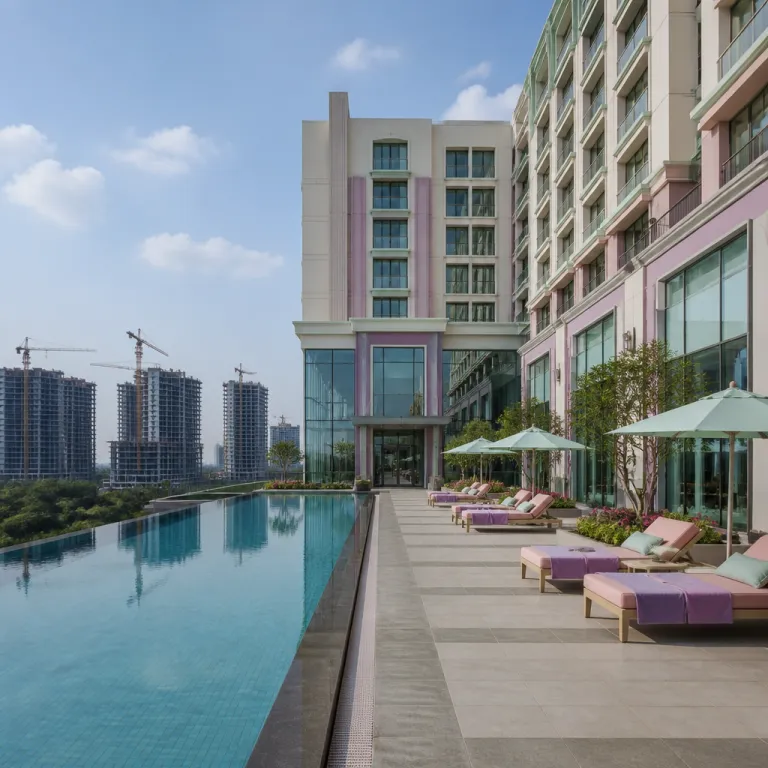
Hotel Pakistan 2026: a new map for luxury stays
Hotel Pakistan 2026: a new map for luxury stays
Pakistan has moved from whispered tip to serious contender for high end travel. The story of hotel Pakistan 2026 is about a country aligning infrastructure, policy and hospitality talent to meet global expectations. For business leisure travelers, that shift is already visible in the way a hotel in Islamabad, Lahore or Karachi now competes with properties in the United States, the Gulf or South East Asia.
The tourism market in Pakistan has been valued by various industry and government sources at around USD 4.9 to 5 billion in recent years, with several forecasts suggesting high single to low double digit annual growth. Hotel revenue is projected in sector reports to approach USD 2 to 2.2 billion within the next few years. These figures are indicative and should be treated as estimates rather than audited totals, but the direction of travel is clear: demand is reshaping where a traveler will stay, how they book and what level of services they can expect from each hotel. When you read the latest exclusive news about new openings or policy changes, you are really reading a live blueprint of how the country wants to present itself to the world.
Government of Pakistan policy has become a decisive factor in this evolution. Reduced Floor Area Ratio charges for hotel developments and a zero tax regime for certain Islamabad projects, as reported in local business news, signal an administration that understands how rooms, not rhetoric, change perceptions of a country. Strategic partnerships between PC Hospitality, Airblue, Aleph Hospitality and Serene Tower PVT Ltd show how a united private sector can translate those incentives into real keys, real staff and real guest experiences. As one regional analyst in Karachi put it in a recent industry briefing, “When the state, investors and operators finally pull in the same direction, the guest feels it in every email confirmation, every airport pickup and every breakfast buffet.”
Islamabad and the northern arc: where policy meets the mountains
Islamabad is no longer just a government town with a handful of legacy properties. In the context of hotel Pakistan 2026, the capital has become a test lab for zero tax hotel policies, digital visa expansion and smarter guest services. For an executive flying in from the United States or Europe, that means a hotel in Islamabad now feels less like an outpost and more like a polished regional hub.
The planned Rotana Islamabad, with more than 500 rooms according to developer announcements, will anchor a new era of international brands in the country. Around it, Serena and PC Hospitality are upgrading suites, integrating AI driven room controls and refining defence grade security protocols without turning lobbies into checkpoints. When you read policy news about the administration’s incentives, you are really reading a promise that your next email check in the lobby will be over better coffee, faster Wi Fi and calmer design.
North of Islamabad, the Karakoram Highway pulls you into a different Pakistan, one where every hotel window frames glaciers, apricot orchards or turquoise lakes. Pearl Continental Attabad Lake, which opened with 117 rooms according to company statements, is the clearest symbol of hotel Pakistan 2026 in the mountains, pairing lakefront decks with serious sustainability measures. For a deeper sense of why this region now belongs on every serious traveler’s map, the analysis in this state of the industry overview for Pakistan is essential reading before you book.
Karachi, Lahore and the southern corridor: business first, leisure close behind
Karachi has always been the country’s commercial engine, but hotel Pakistan 2026 shows a city finally matching its energy with better rooms. New management agreements, smarter refurbishments and AI enhanced services are turning once tired business hotels into credible bases for extended stays. For a traveler shuttling between Karachi, Lahore and Islamabad, the difference is felt in quieter executive floors, more intuitive meeting spaces and staff trained to anticipate rather than react.
Lahore’s luxury scene leans into heritage, with properties near the Mughal core offering courtyards, carved wood and measured formality. Here, the administration’s focus on tourism corridors and improved cross border connectivity with India supports a hotel ecosystem that can host both wedding parties and board meetings. When you read exclusive news about new flights or visa tweaks, remember that each policy line eventually shows up as a better breakfast buffet, a more diverse wine list or a concierge who can secure last minute Wagah border passes.
Further north, the hill stations around Murree and Bhurban are being reimagined for the business leisure persona. Properties highlighted in guides such as this Bhurban hill luxury overview demonstrate how a hotel can now offer credible spa programs, pine forest views and meeting rooms within a two hour drive of Islamabad. For many executives, that means a board meeting in the capital followed by two nights of clean air, chai on the terrace and a late checkout that feels like a small act of board peace with their own schedule.
Hunza, Gilgit Baltistan and Attabad: altitude, access and new luxury codes
Hunza has become the emotional heart of hotel Pakistan 2026, the place where skeptical travelers finally understand why this country matters. The opening of Pearl Continental Attabad Lake, combined with the upcoming PC Legacy Hunza on the Karakoram Highway, signals a shift from ad hoc guesthouses to professionally managed mountain lodges. For guests, that means heated rooms, structured safety protocols and services that respect both altitude and local culture.
Hunza Serena’s inclusion on a global list of great places, as reported in international travel media, underscores how quickly the region has moved from fringe to front page. Pakistan’s government has backed this with the Thandiani Integrated Tourism Zone, a project that aims to balance access, environmental defence and community benefit. When you read news about this initiative, you are really reading about how the country wants to avoid the mistakes of overcrowded hill stations in neighbouring states such as parts of northern India.
Luxury here is not about chandeliers; it is about the chai the shopkeeper insists you finish before he will let you pay, and the guide who knows when to turn back on a glacier walk. Our own coverage of high altitude lounges, including the curated selection in this guide to Pakistan’s hotel tea lounges at altitude, shows how properties are learning to translate mountain hospitality into refined rituals. For travelers comparing hotels in Pakistan and the United States, the trade off is clear; fewer brand names, more soul, and a growing cadre of staff trained by operators such as PC Hospitality and Aleph Hospitality.
Roosevelt Hotel, privatisation debates and what they signal for travelers
The story of hotel Pakistan 2026 is not only written in the mountains and corridors of Islamabad. It also runs through a Manhattan block, where the Roosevelt Hotel in New York has become a symbol of how Pakistan manages state linked hospitality assets. Public reports have discussed potential investment plans in the range of several billion dollars for a Roosevelt Hotel redevelopment, with real estate figures such as Steve Witkoff mentioned in United States and Pakistan news coverage. These discussions have turned a once sleepy asset into a case study in privatisation, governance and national brand.
Debates between different arms of the government, from aviation to finance, have often played out in the media like a transatlantic drama. References to the White House, the administration in Washington and even past United States presidents such as Donald Trump surface whenever commentators compare how different states manage landmark hotels in New York and beyond. For travelers, the key point is simpler; a more commercially minded approach to assets like the Roosevelt Hotel usually means better services, clearer email communication and loyalty programs that actually work.
Within Pakistan, similar questions shape decisions about whether a hotel remains under direct government control or moves into a Pakistan united public private model. When you read exclusive news about a board peace style compromise between ministries or a new privatisation timetable, you are really reading about future room rates, refurbishment cycles and staff training budgets. The more disciplined the governance, the more likely it is that a hotel in Pakistan Karachi or Islamabad will feel aligned with what you expect from a property in New York, Dubai or Singapore.
The 2027 pipeline and how to book smarter now
Looking beyond hotel Pakistan 2026, the pipeline tells you where to place your bets for future trips. Confirmed projects such as Hilton Garden Inn Hyderabad and Holiday Inn Express Islamabad, along with CPEC linked coastal properties, will broaden the map for both business and leisure. For travelers, that means more competition, better services and a wider spread of reliable midscale and upscale options across the country.
CPEC, the China Pakistan Economic Corridor, is not just a geopolitical headline; it is a concrete driver of road upgrades, airport improvements and new hotel sites along trade routes. Pakistan Travel Mart and similar events have become the places where operators, airlines such as Airblue and developers like Serene Tower PVT Ltd align their strategies. When you read news from these fairs, you are really reading early signals about which secondary cities will gain credible hotels and which will remain day trip only.
For now, the smartest move is to treat hotel Pakistan 2026 as a transitional sweet spot. Supply is rising, but not yet saturated, so rates in many cities remain attractive compared with the United States or Gulf states. Book early for Hunza and Attabad, scrutinise cancellation policies in Islamabad during major diplomatic events, and do not hesitate to email properties directly for upgrades or airport transfers; the human touch remains one of Pakistan’s quiet advantages.
Key figures shaping Pakistan’s luxury hotel landscape
- The tourism market in Pakistan is often estimated in government and industry documents at around USD 4.9 to 5 billion, with several analyses pointing to roughly high single digit to low double digit compound annual growth, which places the country among faster growing regional destinations for upscale travel.
- Hotel revenue in Pakistan has been projected in sector forecasts to reach roughly USD 2 to 2.2 billion within the next few years, indicating strong investor confidence in both city and mountain properties, though exact realised figures will depend on macroeconomic conditions.
- Pearl Continental Attabad Lake opened with 117 rooms, a significant capacity for a high altitude lakefront property and a benchmark for future developments in Gilgit Baltistan, according to information shared by the operator.
- Media coverage of the Roosevelt Hotel in New York has cited potential redevelopment values in the range of USD 4 to 4.5 billion in different scenarios, underscoring how seriously Pakistan treats this flagship international hotel asset, while also highlighting that final terms remain subject to negotiation.
- Pakistan’s e visa and visa on arrival initiatives have expanded access for travelers from a large number of countries; while some reports have mentioned figures approaching two hundred eligible states and territories, the exact list changes over time, so visitors should always verify current rules on official government portals.
FAQ: hotel Pakistan 2026 for luxury and premium travelers
What new luxury hotels opened in Pakistan this year ?
Pearl Continental Attabad Lake began welcoming guests with 117 rooms on the shores of Attabad Lake, setting a new standard for managed luxury in Gilgit Baltistan. Several existing hotels in Islamabad, Lahore and Karachi have also completed major refurbishments, adding smart room technologies and upgraded wellness facilities. Together, these moves define the practical reality behind the phrase hotel Pakistan 2026.
How are government incentives changing the hotel experience ?
Reduced Floor Area Ratio charges and targeted tax relief in Islamabad, as reported in local policy news, have made it more attractive to build and upgrade hotels. For guests, that translates into newer properties, more consistent services and a wider range of price points in the same district. The Thandiani Integrated Tourism Zone and similar initiatives also aim to balance growth with environmental defence and community benefit.
What major hotel projects are in Pakistan’s pipeline ?
Key projects include Rotana Islamabad, Hilton Garden Inn Hyderabad, Holiday Inn Express Islamabad and several CPEC linked coastal resorts. Crowne Plaza Multan is scheduled in brand announcements to open later in the decade, expanding international coverage into southern Punjab. These developments mean that hotel Pakistan 2026 is only a midpoint in a much larger expansion story.
How does the Roosevelt Hotel redevelopment affect travelers to Pakistan ?
The Roosevelt Hotel in New York is associated with a Pakistani state linked entity, so any multibillion dollar redevelopment reflects how seriously the country treats hospitality as a strategic asset. A more commercially focused approach, potentially involving partners such as Steve Witkoff as mentioned in United States real estate news, should lead to stronger management practices that can influence standards back home. Travelers may see indirect benefits in better loyalty programs, improved services and more professional governance at hotels within Pakistan.
What should business leisure travelers prioritise when booking in Pakistan ?
Focus on proximity to your meetings in Islamabad, Lahore or Karachi, then look for properties that have recently renovated rooms or added AI enabled services. In the north, book early for Hunza and Attabad, where capacity is limited but quality is rising quickly. Always confirm airport transfers and late checkout by email, as the human centric service culture in Pakistan often allows for flexible arrangements when requested politely.